
Why Hardware Is Becoming Proptech’s Strongest Competitive Moat
From where I sit, the proptech market is entering a period of transition. Companies building both hardware and software are discovering competitive advantages that go well beyond simple product bundling. They’re moving faster and strengthening their competitive position. With AI tools able to rapidly generate new software, the companies that own their hardware layer are pulling ahead.
At the same time, integrations are becoming more strategic and intentional. Integrations still provide value, yet the most successful approach is selective rather than exhaustive. When you own your core product, you can choose integration partners that truly complement your offering, creating stronger, more stable ecosystems.
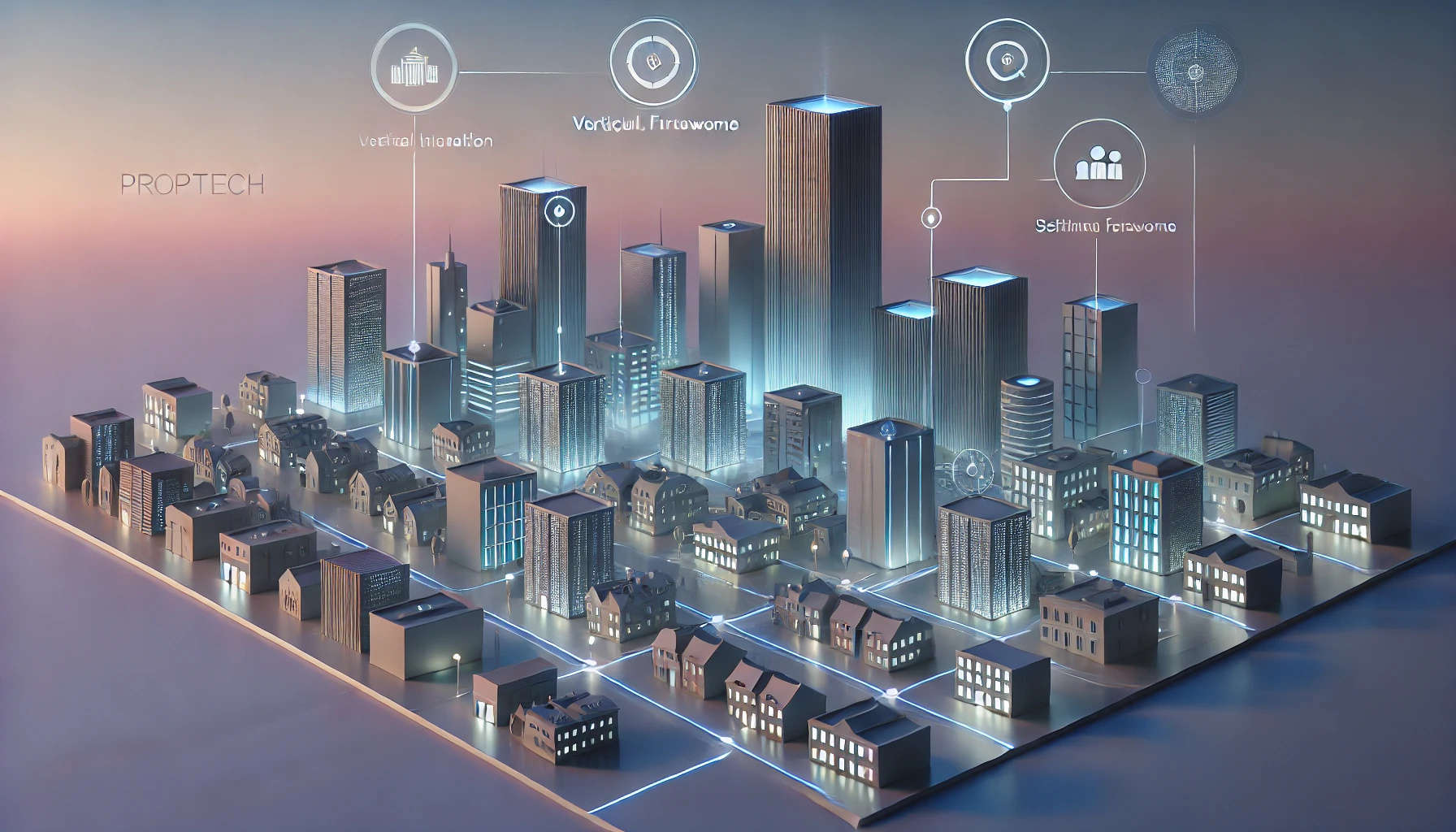
Hardware as Intellectual Property Protection
Many founders in proptech (and the tech ecosystem as a whole) have quickly learned that AI makes it easy to copy software quickly. Hardware is much harder to duplicate. Building hardware in-house creates a defensible moat that software alone can’t provide.
Controlling the hardware layer changes the equation:
● Firmware is under your control, not another vendor’s roadmap
● Engineering cycles are yours to manage, so there’s no waiting for external dependencies
● Updates are released on your timeline, not negotiated through contracts
● Customized features can be incorporated directly into hardware, and those innovations stay proprietary
Innovation is also another key advantage. Building your own technology gives you full control over how far and how fast you push the cutting edge.
Multifamily and single-family rental environments face unique challenges, from device wear-and-tear to evolving compliance requirements. When hardware and software are built together from the beginning, integration becomes the foundation of the product. It’s engineered as a cohesive system rather than assembled from parts designed in isolation.
Supply Chain Lessons We Shouldn’t Forget
The pandemic exposed vulnerabilities that halted production lines and stretched timelines unpredictably. Manufacturers prioritized the largest buyers, leaving smaller customers waiting in line.
Companies dependent on third-party manufacturers discovered how little leverage they had in moments of scarcity. Operators were forced to postpone deployments and customers felt the delays. Revenue forecasts grew increasingly unpredictable. In a supply-constrained world, owning more of the supply chain translates into operational resilience. It protects delivery timelines and insulates customers from external market swings.
Vertical integration in this context is about reliability. It answers a simple question founders and operators should be asking: when constraints tighten, who actually controls the outcome?
Strategic Integrations Create Stronger Ecosystems
Third-party integrations are still critical to proptech success. The key is choosing integration partners that strengthen your product, not just expanding your feature count.
The best integrations add real value to the user experience. When you own your core product (hardware and software), integrations become choices rather than necessities.
You can be selective:
● How well do they scale?
● Do they reduce complexity or add it?
● Do they improve the user experience?
● Do they align with our values?
While the past was all about touting your many integrations, the future is about integrating with the right partners. These are the companies whose products complement yours without creating dependency.
What This Means for Founders and Operators
For founders, the questions become more architectural:
● Where are you dependent on external control?
● What parts of your product experience do you truly own?
● Is your competitive moat built on agreements, or on engineering decisions
that competitors cannot easily unwind?
For operators, the focus is now on stability and defensibility. Which parts of your stack are vulnerable to third-party changes? Are you purchasing a collection of features, or a system designed to hold together under stress?
For investors and consultants, vertical ownership is becoming a necessary factor for long-term resilience. In a market where technology capabilities and customer expectations can change on a dime, control over core components can reduce volatility and protect long-term value.
Complexity Demands Ownership
The next phase of proptech maturity will reward companies that own more of their stack. As stacks grow more complex and AI accelerates execution, the ability to innovate independently becomes increasingly valuable. Vertical integration protects customers by giving you control over product quality and the customer experience. Simple, standalone SaaS isn’t the template for success anymore. The most defensible proptech companies will be those with multiple layers of integration and control.
In an AI-accelerated market where speed magnifies both strengths and weaknesses, ownership translates into stability. As proptech matures, resilience and defensibility are becoming more valuable than rapid expansion alone.


Sorry, the comment form is closed at this time.